

Formal Table Setting Etiquette Guide
There is something quietly reassuring about a beautifully set table. It tells your guests that you have thought about the evening and that their presence is the occasion. But formal table setting etiquette is not about displaying every piece you own. It is about choosing the right pieces for the meal you are serving and arranging them so the evening unfolds naturally.
The organizing principle is simple: set only what the menu requires and arrange pieces so each is used from the outside in, working toward the plate with every course.
What You Need for a Formal Table Setting
A formal place setting is defined by the number of courses on the menu, not the number of pieces on the table. A 3-course dinner and a 6-course dinner are both formal. The difference is what each requires in flatware, plates, and glasses.
The risk most hosts face is not under-setting but over-setting: adding pieces for courses that will never arrive or glasses for wines that will not be poured. A well-considered formal table has only what belongs.
Menu-Based Pieces
Before you set a single fork, write out your courses in order. Each course that requires a utensil gets one; those without one get nothing. As the Emily Post Institute puts it, the placement of utensils is guided entirely by the menu: use them from the outside in, in the order the courses arrive.
- Soup course: soup spoon to the far right of the knives
- Fish course: fish fork left of the dinner fork, fish knife right of the dinner knife
- Salad course: the salad fork position depends on whether the salad is served before or after the entrée
- Shellfish appetizer: the oyster fork, the only fork placed to the right of the plate
Placement Logic
Forks go to the left of the plate. Knives and spoons go to the right, knife blades always facing inward. No more than 3 utensils should be pre-set on either side. The oyster fork is the one accepted exception, permitted as a fourth piece to the right when shellfish are served. Additional flatware for subsequent courses is included with the food.
How to Set a Formal Table Step by Step
Work outward from the table surface, thinking from the diner's perspective at every step.
1. Prepare the Table
The tablecloth is the foundation. A formal table calls for a crisp linen cloth pressed on high heat with steam and laid so it falls evenly on all sides. The traditional drop for a formal dinner is 6 to 12 inches, a depth that reads as deliberate and elegant without pooling in guests' laps. Steam the cloth directly on the table so the natural drape settles correctly.
Huddleson's linen tablecloths, woven in Northern Italy and sewn in our California workroom, give you the weight and smooth finish a formal table deserves. If your table surface is worth showing, a set of luxury linen placemats achieves the same formality while letting the wood or marble breathe. Either way, cloth dinner napkins are not optional.
Space settings evenly around the table, with at least 15 inches between each place setting. Align the flatware so that the lower edges rest approximately 1 inch above the table edge.
2. Center the Dinnerware
Place the charger or service plate first, centered in front of each chair. It acts as an anchor and underplate during the early courses, staying in place until the entrée arrives, at which point it is replaced by the dinner plate. A soup bowl sits on top of the charger.
3. Arrange the Flatware
Work outward from the plate. Forks to the left, knives and spoons to the right, blades inward. The outermost piece on each side is the first one your guests will use. Butter knife: diagonally across the bread plate, handle right, blade down. Dessert utensils are not pre-set; they arrive on the dessert plate.
4. Position the Glassware
The water goblet sits directly above the dinner knife. Additional glasses are arranged to the right in order of use: white wine, then red wine, then champagne if served. When more than 3 glasses are needed, arrange smaller glasses in front of the larger ones. Remove each glass as its course ends.
5. Place Bread and Napkins
The bread plate sits above and to the left of the forks. For a formal setting, fold the napkin into a clean, flat rectangle and place it on the charger. This lets the fabric's texture and hemstitching show clearly. Elaborate folds obscure the quality of the linen rather than display it. If no charger is used, the napkin goes to the left of the forks.
6. Finish with Fresh Flowers
Fresh flowers bring color and life to a formal table, and no setting feels complete without them. Keep arrangements low so guests can see and talk across the table, and place them away from plates and glasses. On a long table, a row of small arrangements usually works better than one large centerpiece. Pick flowers with a light scent so they don't compete with the food. Avoid pollen-heavy blooms like lilies, which can stain fine linen.
How to Set a Formal Table for Different Occasions
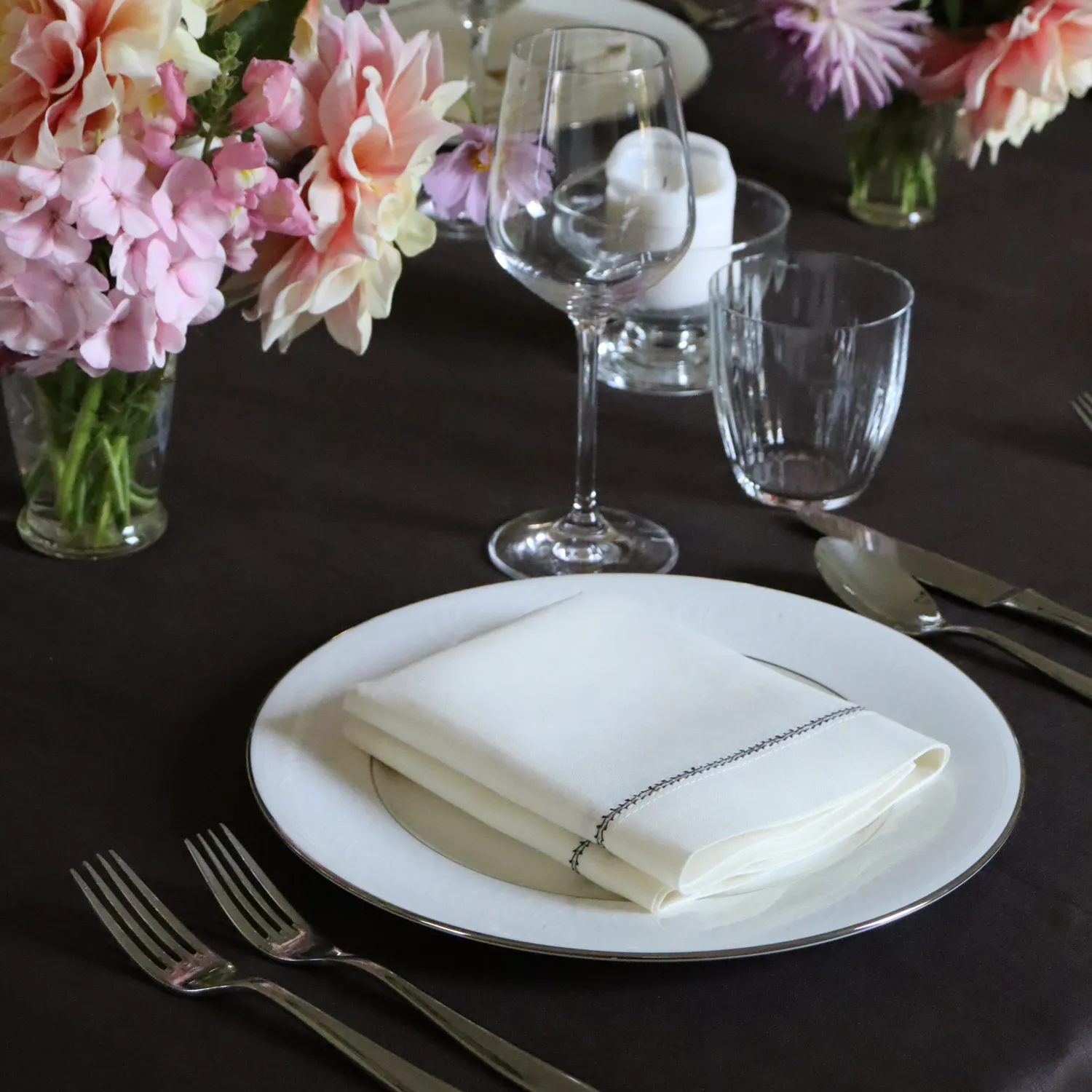
The same placement rules apply across occasions. What changes is the number of courses and the linens you choose.
| Occasion | Key considerations |
| Formal dinner party | Full place setting with charger, course plates, and matched glassware. A rectangular linen tablecloth in white, ivory, or a carefully chosen color sets the tone for the whole table. |
| Holiday or special occasion | Same placement logic; seasonal color or print in the linens adds warmth without departing from formality. A hemstitched napkin finishes the look. |
| Multi-course dinner | Pre-set only 3 utensils per side. Bring additional pieces in with the food rather than crowding the setting from the start. |
How to Adapt the Setting to the Menu
A formal structure does not mean a rigid one. Removing courses you are not serving is not a compromise; it is correct practice. Only the pieces required by the menu belong on the table.
First-Course Pieces
The first course shapes much of the setting. Soup calls for a bowl on the charger and a spoon to the far right. A seafood appetizer is served with an oyster fork. When serving a salad, the salad fork is placed outermost on the left. When a bare wood or marble surface suits the occasion better than a full cloth, linen table placemats define each place setting with the same elegance.
Dessert and Coffee Service
Dessert utensils are not pre-set. They arrive on the dessert plate just before dessert is served. Coffee and tea service follows the meal and is brought to the table rather than placed as part of the original setting.
Formal Table Setting Mistakes to Avoid
A formal table should be consistent, uncluttered, and easy for guests to read.
- Setting pieces for courses that will not be served. Every unused fork raises a question. Set only what the menu needs.
- Turning knife blades outward. Blades always face the plate, without exception.
- Reversing left and right placement. A single reversed setting disrupts the table's overall consistency.
- Overcrowding glassware. More than 3 glasses in a row is difficult to navigate. Arrange smaller glasses in front and remove each as its course concludes.
- A tablecloth with the wrong drop or visible creases. A formal linen tablecloth should fall 6 to 12 inches on all sides and be pressed smooth so the fabric drapes naturally. A wrinkled or ill-fitting piece of clothing draws attention for the wrong reasons.
- Centerpieces that block sightlines. Keep arrangements low. Conversation is the point of the gathering.
Before guests arrive, walk the table. Check that every setting mirrors the others, that glassware is polished, that flatware is aligned, and that each place matches a single reference setting.
Bring Timeless Elegance to Your Next Gathering with Huddleson Linens
A formal table does not require perfection. It requires intention. When the linens are pressed and every piece is in place for the courses you serve, your guests feel that care before the first course arrives. The table is the stage. Dress it thoughtfully.
Explore the full collection at the Huddleson linen store, including Italian linen tablecloths, placemats, and napkins made in our California workroom in the colors and prints that make a table your own.
Frequently Asked Questions
What Is the Difference Between a Formal and Casual Table Setting?
A formal setting includes a charger, course-specific flatware for each course, cloth napkins, and matching glassware. A casual setting uses fewer pieces. The outside-in rule applies to both; the formal version simply has more layers to work through.
Which Side Do the Forks, Knives, and Spoons Go On?
Forks go to the left of the plate. Knives and spoons go to the right, blades facing inward. Arrange them from outside in, so the first utensil your guest needs sits farthest from the plate.
Where Do Water and Wine Glasses Go?
The water goblet sits directly above the dinner knife. White wine goes to its right, then red wine. A champagne flute goes to the far right if champagne is served during the meal.
Does a Formal Table Need a Charger?
A charger is traditional and practical, anchoring the setting and acting as an underplate through the early courses. It is not strictly required, but it is the conventional choice for a formal dinner and adds considerably to the table's visual presence.
How Do You Set a Formal Table for Fewer Courses?
Use the same placement logic and remove the pieces that are not needed. A 3-course dinner still obeys the outside-in rule, uses cloth napkins and a tablecloth, and arranges glassware above the knife. Fewer courses means fewer pieces, not a lesser table.