

How to Iron and Press a Linen Tablecloth
You take the tablecloth out of the wash, shake it out, and face the reality that it looks like it spent the last hour at the bottom of a laundry basket. Which it did. Ironing a large linen tablecloth can feel like a project, but it is one of those tasks that goes faster and better once you know exactly what you are doing.
The short answer for ironing a linen tablecloth is to iron it while slightly damp, use high heat with steam, and work systematically from one end to the other. The result is a smooth, beautifully pressed cloth that lets the linen's natural weight and drape do the rest.
This guide walks through everything you need, from setup to storage. The Huddleson linen store is a good place to start if you need help choosing between linen and easier-care alternatives before making a purchase.
What You'll Need to Iron a Linen Tablecloth
One quick setup before you begin will save time and protect the fabric.
- A steam iron with a high or linen setting
- A padded ironing board in good condition
- A clean cotton or muslin press cloth for protecting hemstitching and decorative borders
- A spray bottle filled with distilled water for adding moisture if needed
- A clean flat surface, such as a large table or clean floor sheet, to support the cloth as sections are pressed and moved off the board
If you are deciding whether your tablecloth needs ironing at all or whether a steamer or relaxed finish suits the occasion better, the linen vs. polyester tablecloth guide covers how different fabrics respond to pressing and care.
How to Prepare a Linen Tablecloth for Ironing
A little preparation produces a noticeably better result.
- Check the care label first: Huddleson's 100% Italian linen handles high heat well, but linen blends, embroidered pieces, and vintage linens may need a gentler approach. The care label on your specific item is the best guide.
- Iron while slightly damp: Remove the tablecloth from the dryer while it still has some moisture, or mist it evenly with a spray bottle. Never dry linen on a high heat, as bone-dry linen takes significantly more effort and produces a less smooth result.
- Use a clean iron: Any residue on the soleplate can transfer to the fabric. Wipe the iron clean before starting.
- Prepare your surface: For large tablecloths, lay a clean bedsheet on the floor beneath the ironing board so that sections already pressed can drape cleanly without picking up dust or re-creasing on a hard surface.
As laundry expert James Joun, co-founder and COO of Rinse, advises in Martha Stewart Living: "For a crisp look, you can iron linen while it is still damp for optimal results." The reason is fiber chemistry: moisture temporarily loosens the bonds in the flax cellulose, allowing heat to press creases flat more effectively than it can on fully dry fabric.
How to Iron a Linen Tablecloth
The reason damp linen irons so much more smoothly than dry linen comes down to the fabric itself.
According to peer-reviewed materials science research, a moisture content of 3 to 15% by weight in natural fabrics, including linen, lowers fiber resistance to heat, allowing creases to release cleanly under the iron without scorching.
Set the Iron to the Correct Temperature
Set to the highest heat setting, typically labeled linen or cotton, with the maximum steam setting. Test on an inconspicuous area first if you are working with a piece you have not ironed before.
Note: Never use high heat on Huddleson's easy-care faux-linen or spun-polyester tablecloths. High heat will damage synthetic fibers. These clothes require no ironing and they should be pressed with a cooler iron, if at all.
Start With the Larger Sections
Begin at one end of the tablecloth and work toward the other in overlapping passes. Move the cloth forward on the board as each section is done rather than trying to iron across the whole width at once. Let pressed sections drape onto the bedsheet below rather than folding them back onto unpressed fabric.
Iron Along the Fabric Grain
Keep the iron moving in long, straight strokes that follow the grain of the weave. Pulling at an angle can slightly stretch linen and distort its hang. Steady, parallel strokes produce the most even finish.
Smooth Seams, Edges, and Corners
Seams and folded edges can hold creases more stubbornly than the main body of the cloth. Press these sections directly, using steam generously. For corners, fold them flat and press from the tip inward. For hemstitched borders, lay the border face-down on a thick, folded towel and press from the reverse side. This keeps the elevated stitching from flattening under the soleplate.
Use Steam for Stubborn Wrinkles
For any stubborn creases that resist the iron, hold the steam function directly over the area for a moment before pressing the iron. Knowing how to remove wrinkles from linen often comes down to moisture: if a crease isn't shifting, mist the area lightly with a spray bottle and press again while the fabric is damp. Deep-set creases from long-term storage may need two passes.
How to Prevent Wrinkles After Ironing
Getting the cloth smooth is a big part of the job. Keeping it that way until it reaches the table is the other half.
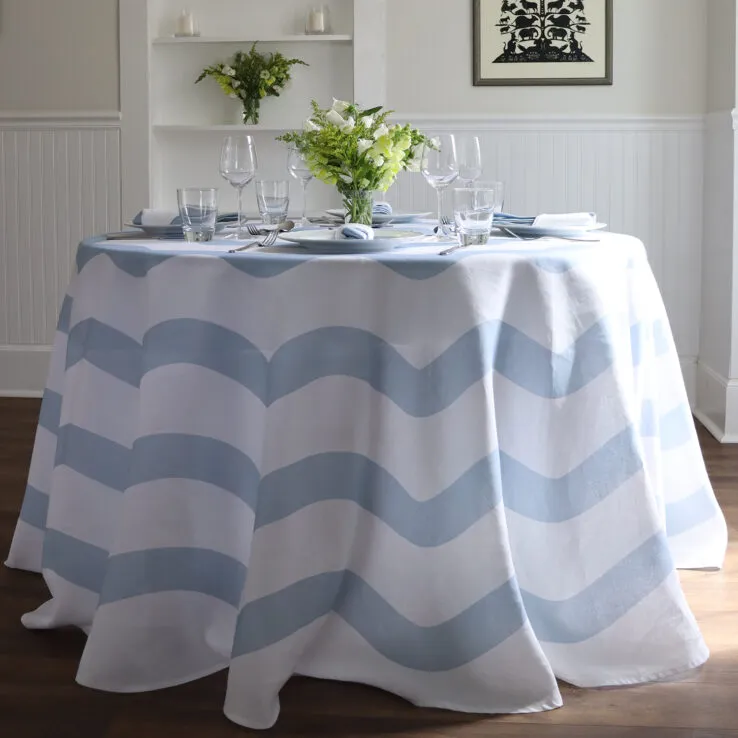
- If possible, carry the tablecloth straight from the ironing board to the table without folding it. This is much easier with someone to help, especially with large cloths such as linen round tablecloths.
- If you have to fold the tablecloth after ironing, let it cool and dry completely first. Folding warm linen immediately sets new creases.
- Lay a piece of white felt on the table before the tablecloth goes on. The felt helps keep the cloth flat, and you can then smooth it out by hand.
- To touch up the sides once the cloth is on the table, lightly spray any creases with water. The weight of the fabric will pull them out as it dries.
Common Mistakes to Avoid When Ironing Linen
A few errors account for most of the frustration people have with ironing linen tablecloths.
| Mistake | Why it happens | What to do instead |
| Ironing bone-dry linen | Fabric left in dryer too long or dried on high heat | Iron while slightly damp or mist evenly before pressing |
| Using low heat | Assuming linen is fragile | Use the highest heat setting with steam for 100% linen |
| Using high heat on faux linen or spun polyester | Treating all tablecloths the same | Those cloths need no ironing; use a cool iron if you choose to iron. |
| Folding while warm | Rushing to store the cloth | Let the cloth cool completely before folding |
| Ironing across the grain | Moving the iron at an angle | Follow the fabric grain in long, straight strokes |
| Using starch on luxury linen | Trying to achieve extra crispness | The 180 GSM weight provides body on its own; a light spray is acceptable if preferred, but heavy starch makes linen brittle |
How to Keep Your Linen Tablecloth Looking Its Best
Regular, straightforward care considerably extends the life of a linen tablecloth and reduces the ironing required each time.
- Wash after each use. Leaving stains to set makes them harder to remove and can permanently mark the fabric.
- For stubborn stains, soak overnight in cold water with a scoop of OxiClean before machine washing.
- Tumble dry on low heat or line dry. Never use high heat in the dryer.
- Iron while slightly damp for the easiest finish, as described above.
- Store in a cool, dry, breathable space away from direct sunlight, which can yellow linen over time.
For square linen tablecloths and other non-rectangular formats, the same care principles apply. Storing flat or rolled prevents the diagonal fold lines that rectangular storage can cause on square cloths.
The Reward of a Well-Pressed Table
A properly pressed linen tablecloth does something that no polyester alternative quite replicates. The weight settles, the drape falls correctly, and the table looks considered before a single piece of flatware is placed. Huddleson's Italian linen, woven in Northern Italy and sewn in our California workroom, is made to be used, washed, and pressed repeatedly, and it only improves with time.
Explore the full collection of Huddleson table linens, from classic whites and ivories to original prints, in standard and custom sizes, at huddleson.com.
Frequently Asked Questions
Should a linen tablecloth be ironed while damp?
Yes. Slightly damp linen presses significantly more smoothly than dry linen. Remove from the dryer while still holding some moisture, or mist evenly with a spray bottle before ironing. Avoid ironing when fully wet, as it can cause watermarks.
What iron setting should be used for linen?
Use the highest heat setting your iron offers, typically labeled linen or cotton, with the steam function on full power. Always check the care label first, particularly for linen blends, embroidered pieces, or Huddleson's easy-care polyester and faux linen cloths, which should not be ironed on high heat.
Can you steam a linen tablecloth instead of ironing it?
A steamer works well for refreshing linen between uses and releasing light creases. For a fully smooth, pressed finish, an iron produces a crisper result. For tablecloths that have been stored and have deeper-set fold lines, ironing while damp will give a cleaner result than steaming alone.
Should you starch a linen tablecloth?
Heavy starch is not recommended for Huddleson's 180 GSM Italian linen. The weight of the fabric provides body on its own, and heavy starch can leave the cloth feeling stiff and brittle. A light fabric sizing spray is acceptable if a crisper finish is preferred. Always check the care label before applying any product.