

Linen vs. Polyester Tablecloths: Which Is Right for You?
You are standing between two tablecloths. One is pure Italian linen, with that slightly irregular texture and a drape that settles beautifully once it is on the table. The other is a high-quality polyester that comes out of the wash looking sharp and needs no ironing at all. Both are well made. The question is which one fits how you actually live and entertain.
The honest answer: linen suits texture-led, considered tables where the fabric is part of the atmosphere. Polyester suits settings where easy care and consistent presentation matter more than tactile character. Fabric weight, weave, and finish can matter as much as the fiber name itself, and quality varies considerably within each category.
Linen vs. Polyester Tablecloths at a Glance
Both materials work. Here is how they compare before going into detail.
| Factor | Linen | Polyester |
| Fiber source | Natural flax plant | Synthetic petroleum-derived |
| Texture | Subtly irregular, tactile, characteristic slub | Smooth and uniform; varies by weave and weight |
| Drape | Fluid; softens and improves with washing | Consistent shape retention; drape varies by weight |
| Creasing | Creases naturally; part of the character | Strongly wrinkle-resistant |
| Stain behavior | Absorbent; releases stains well with correct care | Lower absorbency; oil stains can be more persistent |
| Care | Machine wash; low heat drying; iron while damp | Machine wash; no ironing required |
| Typical price | Higher initial cost; long lifespan | Lower to mid-range; lifespan depends on construction |
| Best uses | Formal dining, considered entertaining, everyday at home | High-frequency use, events, easy-care home settings |
What Is a Linen Tablecloth?
Linen is woven from the fibers of the flax plant, one of the oldest cultivated textiles in the world. It has a distinctive character: a subtle, slightly irregular weave, a tactile weight, and a drape that becomes more fluid and soft with every wash.
Huddleson's linen tablecloths are woven in Northern Italy from pure Italian flax at 180 GSM and sewn in our California workroom. The fabric is OEKO-TEX Standard 100 certified, meaning it has been independently tested and confirmed free from harmful levels of over 1,000 toxic chemicals. It is machine washable and designed to be used, not kept.
What Is a Polyester Tablecloth?
Polyester is a synthetic fiber derived from petroleum, engineered for consistency, durability, and effortless maintenance. They are a practical choice for high-frequency use and events where turnaround between uses needs to be fast.
Huddleson's easy-care range goes well beyond standard polyester. The spun polyester line uses a technical fabric originally developed for fine-dining restaurants: durable, stain-release, and non-iron.
The faux linen range is a heavy 260 GSM textured Panama polyester that feels soft and looks elevated, with a matte finish that reads more like natural linen than typical event-rental fabric. Both are made to order in our California workroom.
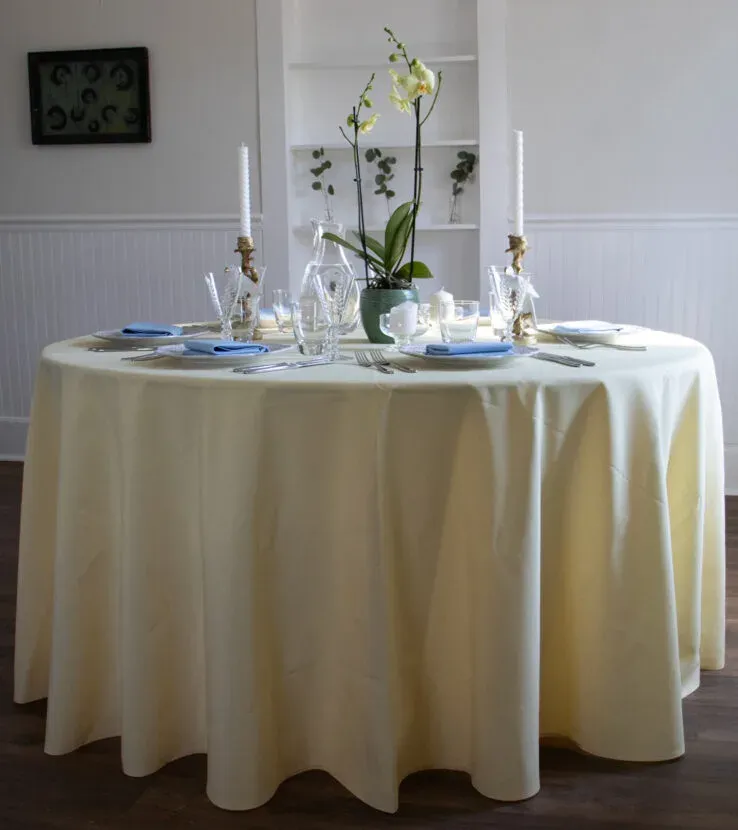
How Linen and Polyester Differ in Look and Feel
Linen brings a natural, slightly variable texture that gives a setting warmth and depth. The weave holds color richly, the fabric develops a gentle patina over time, and relaxed creases are part of its character.
Polyester offers consistency and precision. Color stays even, the surface holds its shape, and there are no creases to manage. Huddleson's faux linen weave adds texture and softness to that equation. A well-made rectangular linen tablecloth and a quality faux linen cloth can both look genuinely polished on the right table. The distinction is in the hand and the detail, not the category name.
How Each Fabric Performs at the Table
Spills and Stains
Linen is naturally absorbent, drawing liquid into the fiber rather than letting it sit on the surface. That same absorbency is what makes linen release stains effectively: an overnight soak in cold water with a stain remover such as OxiClean, then a machine wash.
Polyester's lower absorbency means spills bead up more readily. Huddleson's spun polyester is engineered to release stains, making it well suited to high-frequency use. Oil-based stains can be more persistent, and stain-resistant coatings do not make any cloth stain-proof.
Wrinkles and Drape
Linen creases. That is not a flaw; it is what natural linen does, and relaxed creasing is widely accepted as part of an unfussy, considered table aesthetic. If a crisp finish is preferred, Huddleson's linen irons beautifully while slightly damp, on a hot setting with steam. Huddleson's faux linen polyester will not hold creases at all. It comes out of the wash ready to use, which is a significant practical advantage for anyone who entertains regularly. The drape of the 260 GSM fabric is fluid enough to hang well on most table shapes.
Durability in Use
Both materials can last well. Huddleson's Italian linen should be tumble-dried on low heat or line dried—high heat damages the fibers over time. Linen genuinely improves with every wash, developing a softness and patina that no synthetic fabric can replicate. Polyester is abrasion-resistant and colorfast after repeated washing.
According to a study by the Institut français du textile et de l'habillement, linen production generates about 5 times fewer greenhouse gas emissions than polyester production. Flax requires far less water and no pesticides. Polyester's durability partially offsets its production footprint, but its petroleum-derived origin and microfiber shedding are genuine environmental considerations.
Care, Cost, and Long-Term Value
Washing and Storage
Huddleson's Italian linen is machine washable. Wash separately, use the extra rinse cycle, avoid chlorine bleach, and tumble dry on low heat or line dry. Remove while slightly damp for the easiest ironing. Huddleson cuts its linens slightly larger than listed dimensions so the cloth settles to its true size after the first launder.
Huddleson's polyester and faux linen cloths are machine washable, non-iron, and ready to use straight from the wash. Avoid high heat in both washing and drying.
Price and Lifespan
Linen carries a higher purchase price, reflecting the quality of the raw material and the construction. A well-cared-for linen tablecloth has a long lifespan, which makes the cost per use competitive over time. Polyester has a lower entry price and suits buyers who need multiple cloths, use them frequently, or want a no-maintenance option.
Material Impact
Linen is derived from a renewable plant source. Flax requires less water than cotton and no pesticides under standard cultivation. Polyester is petroleum-derived, and laundering releases microfibers into water systems. Longevity and durability reduce the environmental cost of both materials compared with cheaper alternatives that are replaced frequently.
Common Mistakes When Choosing Linen or Polyester
Getting the choice wrong is usually a matter of mismatched expectations rather than a bad product.
- Expecting polyester to feel like linen: Even high-quality faux linen feels different in the hand. If texture and natural character matter to you, linen is the right choice.
- Expecting linen to be maintenance-free: Linen creases, needs low heat, and benefits from ironing for a crisp result. That is not a problem unless you are unprepared for it.
- Choosing on price alone: A well-made polyester cloth at a fair price will outperform a poorly constructed linen at a similar price. Weight and construction matter within each category.
- Ignoring the care label: Blended fabrics, coatings, and decorative details all change care requirements. The label on the specific cloth you own is the only reliable guide.
- Buying for one occasion and expecting it to suit all of them: Linen suits intimate dinners and considered settings. Quality polyester suits events, frequent family use, and occasions where speed and practicality lead.
- Overlooking the layering option: A linen table runner over a faux linen base cloth gives you the texture and character of natural linen where it is most visible, without committing to a full linen tablecloth for every occasion.
How to Choose the Right Tablecloth Material
The right material follows from how you use the table.
| Use case | Better choice | Why |
| Everyday family dining, frequent washing | Faux linen or spun polyester | Non-iron, fast-drying, durable at high frequency |
| Considered entertaining at home | Italian linen | Texture, drape, and character suit an intimate table |
| Formal dinner parties and seasonal occasions | Italian linen or faux linen | Linen for maximum character; faux linen for ease with a polished result |
| High-volume events and weddings | Spun polyester | Consistency, stain release, no ironing, rapid turnaround |
| Oval or unusual table shapes | Either, custom-made | Both are available in any shape. Oval tablecloths in linen are available in standard and custom sizes |
The Right Cloth for Every Table
Linen and polyester are not in competition. They solve different problems, for different customers a well-considered table linen collection can include both. Linen is for those who cherish natural fibers and for occasions when the fabric is part of the evening. Polyester when the evening needs to be easy.
Huddleson makes both, sewn in our California workroom from materials chosen for quality. Italian linen woven in Northern Italy, faux linen, and spun polyester engineered for performance. Every cloth is made to the shape your table actually is, in the color that suits how you set it.
Frequently Asked Questions
Is linen or polyester better for tablecloths?
Neither is universally better. Linen suits texture-led, considered tables and improves with age. Polyester suits high-frequency use and easy care. The right choice depends on how often the cloth will be used, washed, and pressed, and what the table setting is intended to feel like.
Does linen stain more easily than polyester?
Linen is more absorbent, which means liquid is drawn into the fiber. With the right care, including an overnight soak and a machine wash, linen releases stains effectively. Polyester repels water-based spills more readily but can hold onto oil-based stains.
Can polyester tablecloths look elegant?
Yes, particularly at heavier weights and with a textured weave. Huddleson's 260 GSM faux linen has a soft hand and elevated appearance that reads nothing like standard event polyester. Weight, weave, color, and fit determine how a cloth looks on the table.
Do linen tablecloths need ironing?
Not always. Relaxed linen creases are widely accepted as part of the fabric's character. If a crisp finish is preferred, iron while slightly damp on a hot setting with steam. Huddleson's polyester and faux linen options require no ironing at all.
Which tablecloth material lasts longer?
Both can last many years with correct care. Linen's lifespan depends on laundering temperature and storage. Polyester is abrasion-resistant and colorfast. Construction quality and how frequently the cloth is used and washed matter as much as the fiber itself.